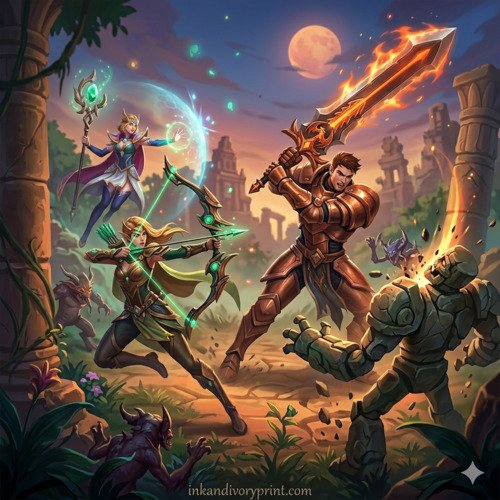
Understanding Animation Timing and Its Influence on Combat
inkandivoryprint.com – In Mobile Legends: Bang Bang, every attack and ability follows a particular sequence of actions. A hero may need to prepare an attack, perform its animation, and return to a state where another action can be executed. Although these sequences happen quickly, they influence how efficiently a player can deal damage, reposition, and respond to threats. Understanding animation timing helps players make better decisions because it reveals when a hero can act freely, when movement becomes restricted, and when an opponent may have an opportunity to retaliate. Mechanical improvement is not simply about pressing buttons faster. It is about understanding how each action affects the next.
Basic attacks provide a useful starting point. Many heroes have a brief attack preparation followed by the damage application and a recovery animation. During this sequence, the player may have limited freedom to change direction or begin another action. If the player repeatedly attacks without considering movement, the hero can become predictable or remain in a dangerous position longer than necessary. This is especially important for marksmen, whose damage often depends on repeated basic attacks. A player who understands the rhythm of these attacks can move between them more deliberately, maintaining damage output while avoiding unnecessary exposure.
Abilities introduce additional differences. Some skills activate almost immediately, while others require a casting animation, a charging period, or a short delay before the effect appears. A powerful ability may deal substantial damage but also reveal the user’s intention through a noticeable movement. An experienced opponent can react to that visual information by moving away, using crowd control, or attacking during the commitment period. Players should therefore learn not only what an ability does, but also how its animation affects their freedom to respond.
The concept of animation commitment is particularly valuable when comparing heroes. A mobile assassin may be able to enter combat, use an ability, and reposition quickly, while a mage with a longer casting animation may need to remain farther away to avoid retaliation. These differences influence the ideal distance from which each hero should engage. Attempting to imitate another hero’s attack rhythm without considering their unique animations can lead to poor positioning and wasted opportunities.
Players can develop better awareness by observing when damage actually occurs rather than assuming it happens at the moment a button is pressed. Watch for the beginning of an animation, the moment the attack connects, and the point at which the hero can move or use another action effectively. This knowledge makes it easier to judge whether an attack is safe, whether a skill can interrupt an opponent, and whether movement should take priority over additional damage. Over time, animation awareness becomes an important foundation for efficient combat rather than a minor mechanical detail.
Learning When to Move Between Basic Attacks
Movement between basic attacks is an important skill for heroes who depend on consistent damage. A player who remains stationary while attacking may produce acceptable damage against an opponent who cannot fight back, but real matches rarely offer such convenient conditions. Enemies move, abilities threaten nearby areas, and positioning changes throughout an engagement. Learning when to move between attacks allows a player to maintain pressure while making it harder for opponents to predict their next position.
The basic principle is to understand the moment when an attack has already delivered its intended effect and continued stationary movement provides little additional benefit. Depending on the hero’s attack animation and the game’s current mechanics, moving after the damage has registered may allow the player to avoid unnecessary waiting before the next action. The exact timing varies between heroes, attack speeds, and ability interactions, so players should practice with their chosen character rather than assume one universal rhythm works everywhere.
For a marksman, controlled movement can create space from a pursuing fighter or assassin. Instead of standing still to complete several attacks, the player can move toward a safer position when the current attack permits it, then continue dealing damage if the enemy remains within a reasonable range. This technique is often described as attack movement or kiting. Its purpose is not simply to move constantly, but to maintain an appropriate distance while preserving as much useful damage as the situation allows.
Melee heroes can also benefit from deliberate movement, although their priorities differ. They may need to remain close enough to maintain pressure while avoiding dangerous ground effects or enemy crowd control. Unnecessary movement can reduce their ability to connect with targets, so every repositioning decision should serve a clear purpose. Moving around an enemy without understanding attack range may create openings for the opponent rather than improve the engagement.
Players should avoid turning attack movement into a rigid sequence. If an enemy is already within immediate striking distance and a decisive attack could secure an elimination, excessive repositioning may delay the result. If a dangerous ability is about to land, survival may require abandoning the attack entirely. Effective movement depends on interpreting the current situation, not following a memorized pattern regardless of circumstances.
Practice should begin in a relatively simple environment where the player can observe attack timing without being distracted by multiple enemies. Focus on issuing a basic attack, recognizing when the attack has connected, and moving to a sensible nearby position before attacking again. Gradually introduce targets that move and create more complicated situations. The objective is to develop a reliable sense of rhythm, allowing movement and damage to complement each other naturally during real matches.
Identifying Opportunities During Enemy Casting Animations
Enemy animations provide valuable information about the actions an opponent is preparing to perform. A hero who begins a long casting sequence may have limited opportunities to change direction or immediately respond to an attack. Recognizing this commitment can help a player decide when to apply pressure, interrupt an ability, or reposition outside its effective area. However, these opportunities should be evaluated carefully because not every visible animation creates a safe opening.
Consider a mage preparing a powerful area attack. If the animation clearly indicates the affected region, nearby opponents may have time to move away before the effect lands. A player who notices the preparation early can leave the threatened area rather than continue attacking and absorb unnecessary damage. If the mage must remain stationary or move slowly during the preparation, a teammate may also have an opportunity to apply crowd control, provided the engagement is otherwise favorable.
The same principle applies to heroes who depend on directional abilities. An opponent preparing a skillshot may reveal the intended direction through their movement or aiming behavior. Although the exact targeting information varies by ability, the general lesson is that visible preparation can help players anticipate danger. Rather than reacting only after damage occurs, they can use the animation to predict what may happen next.
Offensive opportunities require equal caution. Attacking an opponent during a long animation can be effective if the player has enough range, damage, and safety to benefit from the opening. However, some abilities provide defensive effects, crowd control, or follow-up damage that make approaching dangerous. A player should not assume that an enemy becomes helpless merely because they are performing an animation. Understanding the specific ability is essential before attempting to punish its commitment.
Crowd control can be especially valuable when it interrupts a vulnerable action. A well-timed stun or displacement may prevent an enemy from completing a major ability, potentially changing the outcome of a teamfight. Yet using an important control skill too early can leave the team without a response to a more dangerous threat. Players should consider whether the enemy’s current animation is worth interrupting and whether allies can capitalize on the resulting opening.
A disciplined approach combines observation with ability knowledge. Learn which enemy skills have conspicuous preparation periods, which attacks can be interrupted, and which animations are dangerous to challenge directly. During matches, focus on recognizing the beginning of these sequences instead of waiting until their effects are already visible. This habit improves defensive reactions while creating more informed offensive decisions. The goal is not to punish every animation, but to recognize when an opponent’s commitment changes the balance of the encounter.
Improving Efficiency With Marksmen, Fighters, and Assassins
Different roles benefit from animation awareness in different ways because their attack patterns and combat responsibilities are not identical. Marksmen often rely on repeated basic attacks, fighters combine sustained damage with abilities, and assassins depend on precise sequences that can quickly eliminate vulnerable targets. Understanding the action rhythm of each role helps players avoid wasted movement and choose better moments to commit to combat.
Marksmen generally gain the most from maintaining a stable relationship between attack range and movement. Their damage may increase as attack speed improves, making it important to develop a rhythm that remains practical under pressure. If a player issues movement commands too frequently, attacks may be delayed or canceled unintentionally. If the player remains stationary for too long, opponents may find it easier to close the distance. The objective is to alternate attacks and movement in a way that maintains damage while preserving a safe position behind the frontline.
Fighters must pay attention to how basic attacks interact with their abilities. Some heroes have skills that enhance an attack, alter its timing, or create a brief opportunity to approach an enemy. Using an ability without understanding the following attack sequence may waste part of its potential. A player might activate an enhancement but move away before delivering the intended attack, or continue attacking after the opponent has already left the useful engagement range. Learning the order and timing of actions helps the player use abilities more efficiently.
Assassins face a different challenge because their combinations often depend on entering combat at the correct moment. A delayed input may allow an enemy to escape, while an unnecessary action may give the target time to respond. Players should practice the sequence of their hero’s essential abilities and understand which actions require deliberate timing. Nevertheless, a memorized combination should never replace judgment. If the target uses a defensive skill or an unexpected opponent appears, adapting the sequence may be more important than completing it perfectly.
Players should also recognize that equipment and level progression can alter combat rhythm. Increased attack speed may change the timing between basic attacks, while cooldown reductions can affect how often abilities become available. A pattern that feels comfortable early in a match may behave differently later. Practicing only under one set of conditions can create habits that become unreliable when the hero’s attributes change.
The best way to improve is to focus on the mechanics that matter most for the chosen role. Marksmen can practice attacking while maintaining distance, fighters can refine the order of enhanced attacks and abilities, and assassins can focus on clean execution without sacrificing awareness. By understanding how animations shape each role’s strengths and weaknesses, players can become more consistent without relying entirely on reflexes.
Managing Ability Sequences Without Wasting Valuable Time
Ability sequencing determines how effectively a hero converts available skills into damage, control, or defensive value. Pressing every ability as quickly as possible may seem efficient, but it can produce poor results when the abilities have different purposes or timing requirements. Some skills are intended to establish contact, others create crowd control, and others deliver their greatest value after an opponent has been restricted. Understanding these relationships allows players to use their abilities in a more deliberate order.
A common mistake is activating a high-damage ability before the target is positioned for a reliable hit. If the opponent still has an escape skill available, they may move out of the affected area before the damage occurs. In another situation, using a mobility skill to approach may place the hero too close to danger before the rest of the sequence can be completed. These errors are not necessarily caused by poor reaction speed. They often result from misunderstanding how the timing and purpose of each action fit together.
Players should begin by identifying the role of every important ability in their hero’s kit. Determine which skill provides movement, which one deals reliable damage, which one restricts the opponent, and which one is most valuable as a finishing action. Then consider whether the sequence should change according to the enemy’s position and available defensive tools. A fixed sequence can be useful during practice, but real combat requires adjustments when the target moves, an ally intervenes, or a new threat appears.
Animation awareness is also important when deciding whether to continue a sequence. If an opponent activates a dangerous defensive ability, the original plan may no longer be favorable. Continuing simply because the combination has already started can lead to unnecessary damage or an unfavorable exchange. Players should learn to recognize when they can safely continue and when they should stop, reposition, or preserve remaining abilities for another opportunity.
The same principle applies to defensive sequences. A player may need to move away before activating a slower defensive ability, or use crowd control to create enough time for an escape. Using a defensive skill after the threat has already connected may be less effective than anticipating the moment when the opponent becomes committed to an attack. Knowing the animation and effect of both the enemy’s action and the player’s response helps improve the timing of these decisions.
To develop consistency, practice a small number of important ability sequences rather than attempting to memorize every possible combination at once. Pay attention to whether each action produces the intended effect and whether the next input is issued at a sensible moment. Gradually introduce different targets and combat conditions. The aim is to make the sequence familiar enough that attention can remain focused on the battlefield, while retaining the flexibility to abandon it when circumstances change.
Using Animation Awareness During Objectives and Late-Game Battles
Animation awareness becomes especially important around major objectives because players often operate in confined spaces where a delayed reaction can have significant consequences. When teams contest the Turtle or Lord, several heroes may use abilities simultaneously while attempting to secure the objective or prevent the opposing team from approaching. In this environment, understanding action timing helps players distinguish between opportunities to attack, moments when they should protect their teammates, and situations in which an ability must be saved for a more decisive event.
A jungler, for example, must pay attention to the timing of Retribution alongside the objective’s remaining health and the possibility of enemy interference. The exact decision depends on the current situation, but pressing Retribution without considering the objective’s health and the opponent’s potential burst can lead to a lost contest. Animation awareness helps the player recognize when an enemy is preparing an attack that could alter the timing of the secure attempt. It does not guarantee success, but it encourages more deliberate execution rather than relying on a rushed input.
Other teammates have different responsibilities. A roamer may need to interrupt an enemy jungler, while a mage can use area control to discourage opponents from approaching the objective pit. A marksman may continue dealing damage only while a safe position is available. These actions depend on different animation timings, yet they must support the same strategic purpose. If every player focuses exclusively on dealing damage, the team may lose control of the surrounding area or fail to prevent an enemy from contesting the objective.
Late-game teamfights create similar demands. Long respawn timers make major mistakes more costly, and players may have fewer opportunities to recover from a failed engagement. A hero who begins a long casting animation at the wrong moment may be eliminated before completing the action. A player who delays a defensive ability while waiting for an ideal opening may allow an ally to be defeated. Recognizing the timing of both offensive and defensive actions helps players choose when to commit and when to preserve their options.
Players should also avoid assuming that an animation tells the entire story. Visual effects can overlap, targets may be partially obscured, and different abilities can have distinct timing rules. An apparent opening may disappear when another enemy arrives or uses crowd control. The minimap, team positions, health bars, and objective status must remain part of the decision-making process.
After each objective contest or major teamfight, review the moments when timing affected the result. Consider whether an ability was used too early, whether movement interrupted a useful attack, or whether a defensive response came too late. These observations provide concrete areas for improvement. By combining animation knowledge with objective awareness and teamwork, players can execute actions more reliably when the match reaches its most important moments.
Conclusion Animation Awareness in Mobile Legends: Mastering Attack Windows, Skill Recovery, and Combat Efficiency
Animation awareness is an often-overlooked part of improving at Mobile Legends, yet it affects nearly every aspect of combat. Basic attacks, ability casts, movement commands, and defensive responses all have timing characteristics that influence what a hero can do next. Players who understand these characteristics can maintain pressure more efficiently, avoid unnecessary exposure, and recognize opportunities to respond when opponents commit to important actions.
The foundation is learning to observe the complete sequence of an action rather than focusing only on the button press. Recognize when an attack begins, when its effect occurs, and when movement or another ability can be used effectively. Apply that understanding to basic attacks, ability combinations, and reactions to enemy casting animations. Although the precise timing differs between heroes, the broader principle remains consistent: effective mechanics come from understanding how actions interact rather than simply performing them as quickly as possible.
Players should also remember that animation efficiency must serve a larger tactical purpose. Maintaining damage is valuable, but not when it requires standing in a dangerous position. Completing a combination may feel satisfying, but abandoning it can be the correct choice when the target escapes or another enemy threatens the player. The strongest decisions balance mechanical execution with positioning, survival, and awareness of the team’s immediate needs.
Consistent practice is more useful than trying to master every mechanic at once. Choose one area, such as moving between basic attacks or recognizing the preparation of a dangerous enemy ability, and pay attention to it across several matches. Evaluate the results, identify recurring mistakes, and gradually expand the practice to more complicated situations. Over time, these actions become more natural, leaving greater attention available for reading the minimap, tracking opponents, and coordinating with teammates.
Ultimately, animation awareness does not guarantee victory, but it gives players greater control over how they use their heroes. By understanding the timing of attacks, recognizing meaningful openings, and adapting ability sequences to changing circumstances, players can reduce wasted actions and make more reliable contributions throughout a match. Mechanical skill becomes most effective when it is supported by patience, observation, and sound judgment.