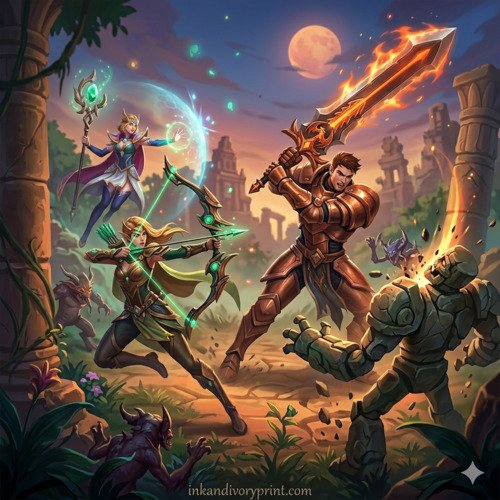
Understanding Team Spacing and Its Influence on Combat
inkandivoryprint.com – In Mobile Legends: Bang Bang, team fights are often decided by more than damage output, crowd control, or the number of heroes involved. The amount of space available to each teammate can determine whether a team executes its strategy successfully or collapses under pressure. Team spacing refers to how players position themselves relative to allies, enemies, and important areas of the battlefield. When spacing is managed properly, each hero can perform their role without unnecessarily restricting another teammate’s movement. Tanks can establish a frontline, marksmen can maintain a safe attacking distance, mages can find useful angles for their abilities, and assassins can move toward vulnerable targets without passing through an overcrowded formation. Problems arise when several players attempt to occupy the same small area, particularly around narrow jungle entrances, bushes, and objective pits. A marksman may struggle to retreat because a teammate blocks the available route, while a fighter may be unable to approach an enemy without crossing directly in front of an allied damage dealer. Even when the game does not physically prevent heroes from passing one another, crowded positioning can still cause confusion, poor targeting, and wasted movement. Players may accidentally direct skill shots toward the wrong enemy, move into an area already threatened by an opponent, or abandon a useful angle because an ally has taken the same position. Good spacing does not mean every hero must remain far apart at all times. Certain strategies require the team to group closely, especially when protecting a vulnerable carry or preparing to engage a single target. The important distinction is whether the formation supports the team’s immediate objective. Players should recognize when close grouping provides protection and when it creates unnecessary vulnerability to area damage. They should also understand that spacing changes throughout a fight. A formation that works during the opening engagement may become unsuitable after an enemy assassin enters the backline or a tank moves toward a different target. By observing the positions and responsibilities of teammates, players can make small adjustments that preserve movement options and reduce avoidable mistakes. Effective team spacing turns individual movement into coordinated action, allowing each hero to contribute without interfering with the others.
Creating Clear Frontline and Backline Positions
A well-organized formation usually separates heroes according to their responsibilities rather than allowing everyone to rush toward the same opponent. Tanks and durable fighters often operate closer to the enemy, where they can absorb pressure, threaten important targets, or create opportunities for their teammates. Marksmen and many mages generally benefit from positions that provide attacking access while keeping dangerous enemies at a manageable distance. Assassins may remain outside the main formation until an opening appears, while support heroes adjust according to whether their priority is protecting allies or helping initiate combat. These roles are flexible, but the principle remains useful: every teammate should understand which area of the fight they are trying to control. When the frontline moves forward, the backline should not automatically follow into the same space. Instead, ranged heroes can advance enough to maintain effective attack range while preserving room to retreat. If the frontline retreats, backline players should recognize that the original protection may no longer exist and adjust accordingly. Problems frequently occur when players follow a teammate without considering their own hero’s strengths. A marksman who stands directly behind a tank may have limited space to dodge an approaching enemy, while a mage who moves too far forward may become the easiest target for an assassin. Similarly, a tank who remains beside the backline throughout the entire fight may fail to create pressure that forces enemies to respect the frontline. Players should use the battlefield’s geometry to establish separate but connected positions. Wider areas can support several attacking angles, while narrow entrances require greater discipline because movement options are limited. Teammates should avoid spreading so far apart that they cannot help one another, but they should also avoid stacking in a single predictable location when the enemy has powerful area abilities. A good formation provides enough separation for individual actions while maintaining a reasonable distance for follow-up attacks and protection. The goal is not to maintain a perfect arrangement throughout every second of combat. Instead, players should understand how their position supports the team and recognize when moving a short distance can improve the formation without sacrificing an important responsibility.
Recognizing When the Formation Becomes Too Crowded
Crowded positioning often develops gradually, making it difficult for players to recognize the problem before a fight becomes dangerous. Several teammates may gather near a bush because they expect an enemy to appear, or everyone may move toward the same target after a successful initiation. At first, this behavior can seem efficient because the team has more damage available in one location. However, concentration becomes a disadvantage when players lose access to useful movement routes or become vulnerable to a single area attack. A mage with an area-control ability may punish several grouped heroes at once, while an enemy fighter can exploit the confusion to reach a fragile target. Crowding also makes it harder to identify which teammate should initiate, which player should protect the backline, and which hero should pursue a retreating opponent. The solution is to evaluate the purpose of the gathering. If the team is preparing to secure an objective, grouping may be necessary to contest the area and respond quickly to an enemy approach. If the team is defending a narrow entrance against an opponent with strong area damage, however, slightly wider positioning may reduce the risk of several heroes being affected by the same ability. Players should also pay attention to movement routes. If an ally has already committed to an approach, avoid stepping directly into the path they need to follow unless doing so serves a clear defensive purpose. When several heroes are retreating, moving toward a different safe route can prevent unnecessary congestion and reduce the chance that everyone gets caught by the same pursuing enemy. Spacing should also reflect the opponents’ available tools. Against enemies who rely on area crowd control, separation can be particularly valuable. Against a single-target assassin, the team may benefit from keeping vulnerable heroes close enough to receive protection without standing directly on top of one another. These adjustments require awareness rather than complicated commands. Players can observe the formation, identify the most important escape routes, and make small positional changes before a mistake becomes costly. Recognizing crowding early helps the team preserve its formation, respond to enemy abilities more effectively, and avoid turning a favorable engagement into a disorganized fight.
Applying Better Spacing During Team Fights and Objective Contests
Once a team fight begins, available movement routes can become as important as the positions heroes initially occupy. Players often focus on attacking the nearest enemy, but every attack and movement decision should account for what may happen next. A marksman needs enough space to step backward when an assassin approaches, while a mage may need a diagonal route that avoids an enemy’s frontal crowd control. Tanks and fighters should consider where their teammates are standing before committing to a movement ability that carries them across the formation. A forward dash can create an excellent initiation, but it can also leave a narrow corridor blocked by the user’s position or force a fragile ally to move into danger to maintain attacking distance. Before engaging, players should identify at least one reasonable route for continuing the fight and one for disengaging if the situation deteriorates. These routes do not need to remain unchanged, because enemy movements and ability effects can quickly alter the battlefield. What matters is avoiding unnecessary commitments that leave teammates with no practical response. During combat, players should resist the habit of moving directly toward whichever enemy is currently visible. The shortest route is not always the safest or most effective route. A small sideways movement may preserve attack range while avoiding a dangerous skill, and a brief retreat may allow an ally to reposition without abandoning the engagement. Players should also avoid following an enemy into a narrow passage when the rest of the team lacks the position or resources to support the chase. If a teammate has already moved forward, another player can sometimes maintain a safer angle instead of entering the same corridor. This provides an alternative route for follow-up damage and may prevent the entire team from becoming trapped. Movement discipline is especially important when several abilities create temporary zones of danger. Players should recognize where enemy attacks are likely to land and avoid forcing teammates through those areas merely to maintain a tightly grouped formation. By treating movement routes as valuable resources, teams can preserve flexibility throughout the engagement and make better decisions when the original plan no longer fits the situation.
Adjusting Spacing Around Objectives and Narrow Terrain
Turtle and Lord contests demand careful spacing because teams must manage enemies, terrain, ability ranges, and the objective itself within a limited area. Gathering near an objective is necessary to establish control, but the exact arrangement can determine whether a team can respond to an enemy approach. If every hero stands inside the objective pit, the team may have difficulty leaving when a powerful enemy ability targets the area. If everyone remains too far away, the opposing team may enter uncontested or threaten the objective without facing sufficient pressure. A balanced formation assigns different responsibilities to different positions. Durable heroes can watch likely approach routes and challenge opponents who attempt to enter, while ranged damage dealers maintain access to safe attacking angles. A jungler should preserve the ability to approach the objective when the team is ready to secure it, rather than becoming isolated on the opposite side of the formation. Support heroes can position themselves where they can assist more than one teammate without standing directly in the path of an approaching enemy. The best arrangement depends on the team composition and the surrounding terrain, so players should avoid copying a fixed formation into every contest. Narrow jungle corridors may require the frontline to control the entrance while ranged heroes attack from a nearby position with enough room to retreat. Wider areas may allow the team to create several angles, making it harder for enemies to engage everyone with one ability. Players should also consider how the formation will change if the objective is contested unexpectedly. A team that has spread too widely may struggle to respond to an enemy initiation, while a team that has grouped too tightly may suffer heavily from area damage. The objective’s health is another important factor because the team’s priorities may shift between damaging the monster and fighting the opponents. When an enemy approaches, some heroes may need to turn toward the threat while others maintain control of the objective area. Clear spacing makes this transition easier because players can respond without crossing through one another’s positions. Successful objective control therefore requires more than knowing when to attack Turtle or Lord. It also requires arranging the team so that each player can perform their task, react to danger, and move toward the next decision without unnecessary congestion.
Recovering Formation After a Disorganized Fight
Even disciplined teams can lose their formation when an engagement develops unexpectedly. An enemy may flank the backline, a tank may be displaced from the frontline, or several allies may retreat in different directions after a failed initiation. In these situations, trying to restore the original formation immediately can create additional problems. Players should first identify the most urgent threat and determine which teammates can still support one another. If a fragile damage dealer is being pursued, nearby heroes may need to establish a protective position rather than continue chasing the original target. If the frontline has been forced away, ranged heroes should avoid advancing as though the same protection remains available. Sometimes the correct response is to retreat toward a safer area and regroup instead of attempting to continue a fight that has already become unfavorable. Players should also recognize when a teammate’s position cannot be rescued without creating a second disadvantage. Entering a dangerous area to help an isolated ally may be justified when the team has enough resources to turn the fight, but following blindly can cause multiple deaths without changing the outcome. A useful recovery decision considers remaining health, available abilities, enemy positions, and the distance between surviving teammates. If several allies are close enough to defend one another, the team may be able to stabilize and prevent the enemy from pursuing further. If the survivors are scattered and low on health, withdrawing toward a safe turret or another defensible area may be more sensible. Once immediate danger has passed, players should rebuild the formation according to the next objective rather than automatically returning to the exact positions they occupied before the fight. A lost engagement may change which lanes need attention, which enemy threats must be respected, and whether the team can safely contest the next objective. Players can use brief pings to communicate retreat intentions, mark dangerous enemies, or signal that the team should regroup. The purpose is not to eliminate every mistake but to prevent one positional error from triggering several more. Strong recovery depends on accepting that the situation has changed and choosing a formation that fits the current state of the match. By remaining flexible after a chaotic engagement, players can limit further losses and prepare for a more coordinated attempt when the next opportunity appears.
Conclusion Mobile Legends: Mastering Team Spacing to Improve Movement and Combat Efficiency
Team spacing is an important part of effective Mobile Legends gameplay because it connects individual positioning with the team’s ability to attack, defend, retreat, and control objectives. Players can have excellent mechanical skills and strong hero knowledge, yet still struggle when they occupy the same space, block useful movement routes, or enter combat without understanding how their positions support one another. A well-managed formation allows each hero to contribute according to their role while maintaining enough flexibility to respond when the enemy changes the situation.
The first step toward better spacing is understanding the purpose of each position. Frontline heroes generally need to create pressure and control access to important areas, while ranged damage dealers require enough room to attack without exposing themselves unnecessarily. Assassins and other mobile heroes often benefit from keeping alternative approach routes available rather than immediately entering the center of the fight. These responsibilities can change according to the heroes involved, but players should always consider whether their current position helps the team achieve its immediate goal. Staying close together is not automatically correct, just as spreading out is not always safer. The appropriate formation depends on enemy abilities, terrain, available escape routes, and the type of engagement the team wants to create.
During team fights, preserving movement routes is just as important as choosing an initial position. Players should avoid unnecessary congestion, consider the paths their teammates need, and recognize when a small positional adjustment can improve the entire formation. Objective contests require similar discipline because the team must balance control of Turtle or Lord with protection against enemy attacks. After an engagement becomes disorganized, the priority should be stabilizing the remaining team, protecting vulnerable allies when practical, and deciding whether to continue fighting or withdraw.
Improvement comes from observing the results of positional decisions rather than judging every fight solely by kills or damage. After a match, players can consider whether they blocked an ally’s route, followed a teammate too closely, entered a dangerous area without support, or retreated in a direction that separated them from the team. Correcting one recurring mistake at a time makes the learning process more manageable and produces more consistent results over multiple games.
Ultimately, good team spacing does not require perfect coordination or constant communication. It requires awareness, adaptability, and an understanding that every hero’s movement affects the options available to nearby teammates. When players maintain useful distances, preserve escape routes, and adjust their positions as the battle develops, their team becomes harder to disrupt and better equipped to convert favorable situations into victories. The strongest formation is not the one that remains unchanged throughout the match, but the one that adapts to each new threat while allowing every teammate to perform their role effectively.